
101 Pharmacology Crossword Puzzles
For Nurses, Nursing Students, and Healthcare Professionals
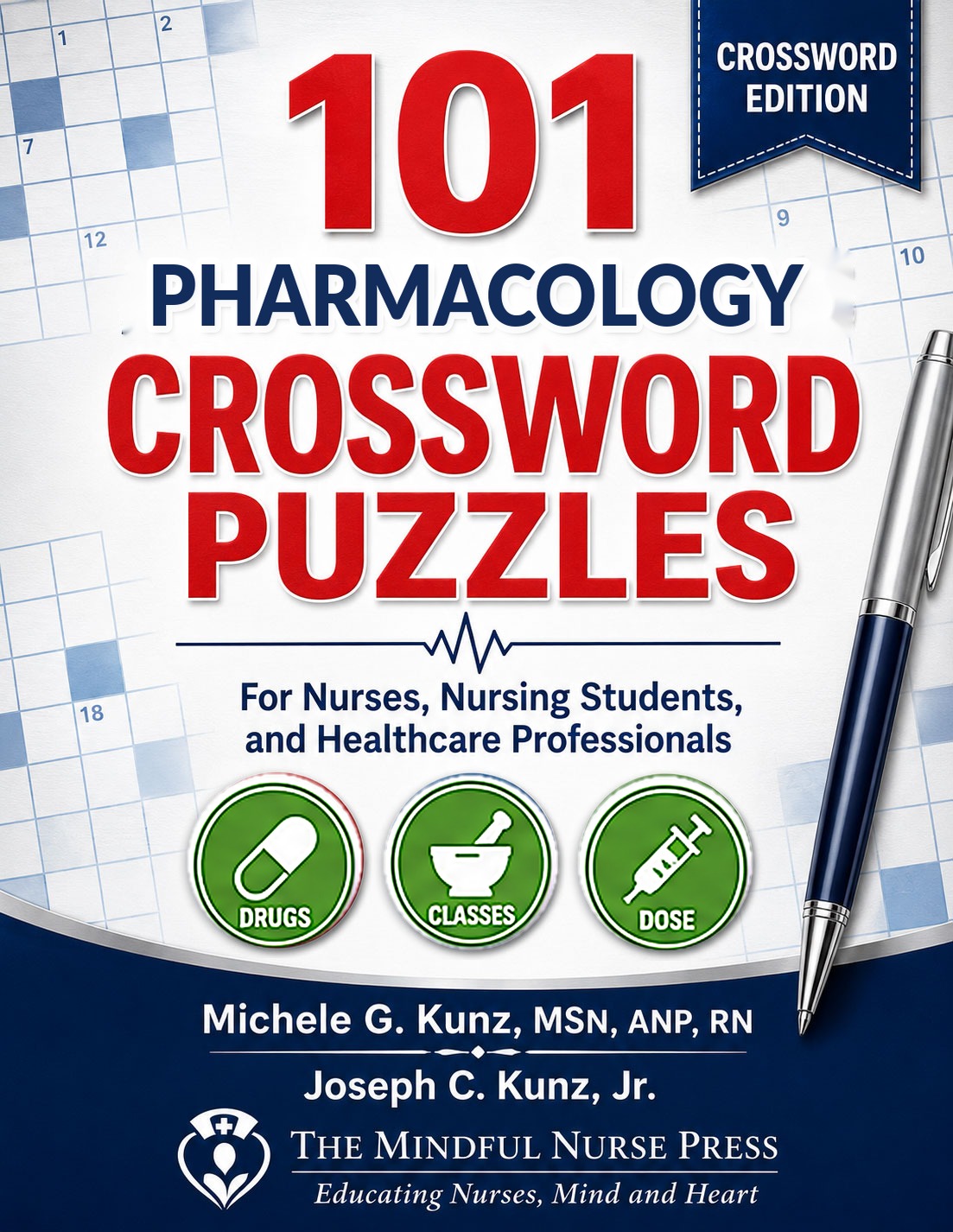
Turn Drug Facts Into Clues You Have to Solve
Pharmacology asks healthcare learners to keep track of an enormous amount of interconnected information: medication names, drug classes, mechanisms, indications, routes, adverse effects, interactions, safety concepts, monitoring, and the principles that connect them.
This book turns that material into 101 focused crossword challenges arranged from pharmacology foundations through the major therapeutic drug families.
About This Book
The book is organized into fifteen parts. It begins with what pharmacology is, drug names and classifications, medication orders, references, abbreviations, pharmacokinetics, pharmacodynamics, and medication safety. It then progresses through autonomic, cardiovascular, respiratory, CNS, pain, anti-infective, endocrine, gastrointestinal, renal, immune, blood, oncology, nutrition, topical, and special-use drugs before ending with the Ultimate Pharmacology Challenge.
The crossword format makes the learner move from description to answer. A clue may describe a medication, drug class, mechanism, receptor, route, adverse effect, antidote, monitoring concept, or pharmacologic principle. You have to interpret the relationship and retrieve the term that fits.
What You’ll Find Inside
- Foundations of Pharmacology: What pharmacology is; generic, brand, and chemical names; classifications; drug development; prescriptions and medication orders; drug references; abbreviations and symbols.
- Pharmacokinetics and Pharmacodynamics: Absorption, distribution, metabolism, excretion, half-life, onset, peak, duration, receptors, agonists, antagonists, therapeutic index, and dose-response relationships.
- Medication Administration and Safety: Rights of medication administration, routes, enteral/parenteral/topical/transdermal medications, dosage calculations, medication errors, high-alert drugs, adverse effects, allergies, and interactions.
- Autonomic, Cardiovascular, and Respiratory Drugs: Cholinergic, anticholinergic, adrenergic and blocking drugs; antihypertensives, diuretics, ACE inhibitors/ARBs, calcium channel blockers, beta blockers, nitrates, antiarrhythmics, heart-failure drugs, anticoagulants, thrombolytics, lipid-lowering drugs, bronchodilators, corticosteroids, antihistamines, decongestants, and asthma/COPD drugs.
- CNS, Pain, Anesthesia, and Anti-Inflammatory Drugs: Sedatives, anxiolytics, antidepressants, antipsychotics, mood stabilizers, Parkinson and seizure drugs, stimulants, Alzheimer drugs, opioids, opioid antagonists, NSAIDs, acetaminophen, migraine drugs, anesthetics, and gout/arthritis drugs.
- Anti-Infective and Endocrine Drugs: Antimicrobial principles; major antibiotic families; antitubercular, antifungal, antiviral, and antiretroviral drugs; insulin, oral antidiabetics, thyroid drugs, corticosteroids, pituitary/hypothalamic drugs, reproductive hormones, and bone/calcium drugs.
- GI, Renal, Immune, Blood, Oncology, and Special-Use Drugs: Acid-reducing drugs, antiemetics, bowel medications, IBD drugs, digestive enzymes, fluids and electrolytes, bladder and acid-base drugs, vaccines, immunosuppressants, anemia drugs, chemotherapy, biologics, antirheumatic drugs, vitamins, supplements, dermatologic, ophthalmic, otic, herbal, and complementary products.
- Comprehensive Challenge: Puzzle 101 draws material from across the entire book into one final pharmacology review.
- Complete answer key: Check every puzzle and use missed clues to identify drug families or principles that deserve another review.
- Full-size 8.5 × 11-inch format: The grids and clues are designed for comfortable, active study.
Who This Book Is For
- Nursing students who want another way to reinforce pharmacology coursework.
- Pharmacology students working with medication names, classes, mechanisms, effects, routes, and safety concepts.
- Nurses and healthcare professionals who want a structured but less formal way to revisit familiar pharmacology.
- Healthcare students whose professional education includes medication knowledge.
- Healthcare educators looking for topic-focused supplemental activities.
- Crossword learners who enjoy solving clues and want to apply that problem-solving habit to drug study.
How This Book Works
Crosswords reverse the usual study sheet. Instead of showing a medication beside its class or effect, the puzzle gives you the description and asks you to retrieve the answer. A clue might name an adverse effect and ask for the drug, describe a receptor and ask for the class, or define a pharmacokinetic concept and ask you to identify it.
The learning sequence is: read the clue, interpret the pharmacologic relationship, retrieve the term, and use crossing letters when needed. That is the retrieval-focused role of this book within the three-format Pharmacology series.
From Basic Principles to Clinical Drug Classes
The order of the book is intentional. It does not begin with hundreds of medication names. It first establishes the concepts that help medications make sense: drug naming, classification, pharmacokinetics, pharmacodynamics, routes, administration, safety, adverse effects, and interactions.
Only then does it move systematically through major therapeutic drug families. That progression reinforces an important idea: pharmacology is not merely a catalog of drugs. It is a system of relationships among drug, class, mechanism, effect, patient, route, and risk.
About the Authors
Michele G. Kunz, MSN, ANP, RN
Michele G. Kunz is a nurse practitioner, longtime nursing educator, author, and healthcare instructor whose work focuses on making complex clinical material easier to organize, review, and remember. Through The Mindful Nurse Press, she develops practical educational resources for nurses, nursing students, and other healthcare professionals.
Joseph C. Kunz, Jr.
Joseph C. Kunz, Jr. is an author and publisher who has been developing educational materials and study guides for students and professionals since 1985. He works with Michele to organize complex healthcare subjects into clear, practical learning resources presented through multiple study formats.
Educational Note
101 Pharmacology Crossword Puzzles is intended for educational, recreational, and general review purposes. It is not a clinical drug reference, prescribing guide, or source of medical advice and does not replace formal instruction, clinical training, current medication references, manufacturer prescribing information, institutional policies, professional judgment, or applicable clinical guidelines.
Medication information changes. New drugs, indications, warnings, contraindications, interactions, formulations, and recommendations may appear after publication. Healthcare professionals and students should consult current authoritative sources when making medication-related clinical or educational decisions.
Book Details
- Title: 101 Pharmacology Crossword Puzzles
- Authors: Michele G. Kunz, MSN, ANP, RN & Joseph C. Kunz, Jr.
- Publisher: Dickson Keanaghan, LLC
- Imprint: The Mindful Nurse Press
- Publication Date: September 2026
- Edition: First Paperback Edition
- Format: Paperback
- Page Count: 134 pages
- Trim Size: 8.5 × 11 inches
- ISBN: 978-1-933230-96-2
- Language: English
The Complete Pharmacology Puzzle Series
Study the same subject three different ways—through clue-based retrieval, terminology recognition, and guided recall in context.
101 Pharmacology Crossword Puzzles
101 Pharmacology Word-Search Puzzles
101 Pharmacology Fill-in-the-Blank Exercises
Three formats. Three different mental tasks. One matched Pharmacology study series.